



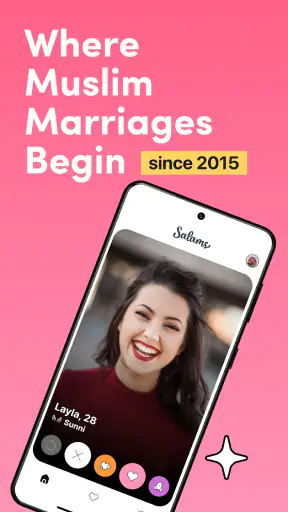
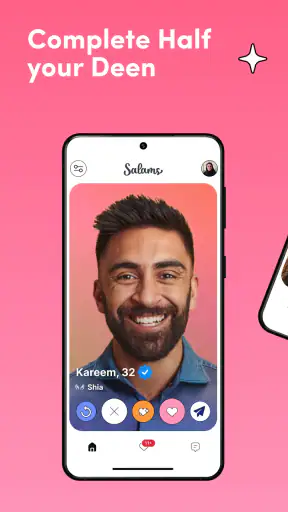

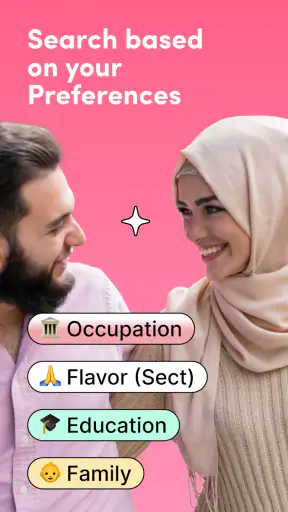
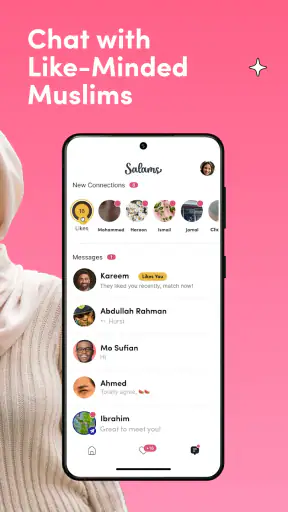

I approached Salams: Halal Muslim Marriage as a social app with a clear purpose rather than as another general dating service. Its focus is Muslim marriage, Muslim friendships, and halal dating, so the experience feels more intentional than the endless, broad matching style I usually associate with mainstream dating platforms. That focus is its biggest strength, but it also means the app works best when I use it with patience, clear boundaries, and a realistic idea of what I want.
The app is free to download and use, and it is published by Affinity Apps, LLC. It has reached over a million installs and holds a 4.0 average from around twenty-nine thousand ratings, which suggests that it has built a substantial audience while still leaving room for mixed experiences. It is rated Mature 17+, and the current version is 12.13.1 for devices running iOS 9 or later. In-app purchases range from under a dollar to a much higher top tier, so I would not treat every optional upgrade as automatically necessary.
How I would use Salams from the first profile onward
Start with a profile that filters for intention
The first useful habit is to treat the profile as a conversation filter, not as a personal advertisement. On an app designed around Muslim relationships, a vague profile can create more confusion than curiosity. I would state what I am looking for in plain language, keep the tone respectful, and include enough detail for someone with similar expectations to recognize the fit.
This does not mean writing a long biography. A short explanation of whether I am interested in marriage, friendship, or getting to know someone in a halal way is more useful than a collection of generic compliments. I would also avoid presenting an idealized version of myself that becomes difficult to maintain once a conversation starts. The strongest profile is usually the one that makes the next question easy.
Salams is especially useful for someone who wants the social setting to begin with a shared cultural and religious context. That can reduce the awkwardness of explaining basic expectations that might be unfamiliar on a general dating app. At the same time, I would not assume that every person on the platform has identical views about family involvement, timing, communication, or marriage. The app creates a relevant starting point, not an automatic guarantee of compatibility.
Use the first conversations to confirm direction
My preferred workflow would be simple: browse thoughtfully, connect when there is a genuine reason, and move toward meaningful questions instead of collecting matches. A match is only a possibility. The real value appears when both people can discuss intentions without turning the exchange into an interview.
Early messages can cover practical subjects such as what each person hopes to find, how seriously they view marriage, and what kind of communication feels appropriate. I would not force deeply personal topics immediately, but I would also avoid spending weeks in a vague chat that never moves anywhere. A respectful conversation should gradually reveal whether the two people are working toward the same kind of relationship.
One everyday scenario shows where the app can fit naturally. Imagine I have a busy workweek and do not want to spend evenings sorting through a general dating feed with uncertain intentions. I can check Salams during a short break, review a small number of profiles, and respond only to conversations that match my stated goals. Later, if a connection feels promising, I can discuss the next appropriate step rather than letting the interaction remain an endless exchange of small talk.
Keep the process deliberate instead of turning it into swiping
The temptation with any matching app is to measure progress by activity: more browsing, more matches, more messages. I think that approach is particularly unhelpful here. Salams makes more sense as a tool for narrowing possibilities than as a game that rewards constant attention.
I would set a personal rhythm for checking the app, then leave it alone when I have enough conversations to handle properly. This protects the quality of replies and makes it easier to notice red flags. It also prevents the common mistake of opening several chats simply because the interface makes each new profile feel urgent.
A useful rule is to pause before starting another conversation and ask whether I can give the existing ones a fair chance. If the answer is no, more matches are unlikely to improve the experience. This is one of the simplest ways to get more from a free social app without immediately paying for extra visibility or discovery tools.
Settings and boundaries deserve attention before matching
I would spend time reviewing every available preference before becoming active. The exact choices shown can depend on the current version and device, but the principle is consistent: the more clearly I define my expectations, the less time I spend correcting misunderstandings later. I would check profile details, discovery preferences, notification behavior, and any privacy or safety controls presented in the account area.
Notifications are worth handling early. If every interaction produces an alert, the app can begin to feel more demanding than helpful. I prefer notifications that tell me about meaningful activity while allowing me to read and answer messages when I have enough attention. If the controls allow separate choices for different types of activity, I would reduce the noisy ones first rather than silencing everything.
Profile visibility also deserves a deliberate decision. Some users want broad discovery, while others would rather be more selective about who can find them. I would choose the setting that matches my comfort level, then revisit it after using the app for a few days. A setting that feels fine before receiving messages can feel different once the account becomes active.
The most important setting is not a paid upgrade; it is the boundary I decide to enforce. I would never share sensitive personal information simply because a conversation feels warm. I would keep financial details, private documents, exact home information, and anything that could compromise personal safety outside the chat. A faith-focused environment can encourage trust, but good judgment still matters.
Make the profile easier to evaluate
Experienced users tend to make their profiles easy to understand at a glance. I would use a clear main photo, avoid images that make basic identification difficult, and write answers that say something specific about my personality or routine. The goal is not to impress everyone. It is to help the right people decide whether a conversation is worth beginning.
I would also review the profile after a week of real use. If people repeatedly ask questions that I thought I had already answered, that is useful feedback. Perhaps the wording is too vague, or an important expectation is buried. Small edits can improve the quality of incoming conversations without changing the entire account.
There is a trade-off here. More detail can discourage people who prefer a very private introduction, while too little detail creates unnecessary back-and-forth. I would aim for enough information to establish direction, then save more personal subjects for a conversation that has earned that level of openness.
Shortcuts that make regular use calmer
The fastest way to use Salams well is not necessarily to browse faster. It is to create repeatable decisions. I would use the same quick check for every promising profile: does the person appear to want the same type of connection, is the profile specific enough to encourage a real question, and do I feel comfortable starting a respectful conversation?
That three-part check helps prevent two opposite mistakes. I am less likely to dismiss someone because the profile is not flashy, and less likely to start chatting with someone whose intentions clearly do not match mine. It also keeps my attention on compatibility rather than on superficial activity.
For messages, I would avoid sending a copy-and-paste opener to everyone. A brief reference to something genuinely visible in the profile works better and gives the other person an easy way to respond. If the reply is consistently vague, dismissive, or uncomfortable, I would not try to rescue the conversation through persistence. Ending an unsuitable exchange early is a productivity feature in its own right.
Another useful habit is to move from general questions to practical compatibility in stages. I might begin with interests and daily routines, then discuss expectations and communication style, and only later consider more serious topics. This sequence keeps the conversation human while still preventing a long period of uncertainty.
What paid options can and cannot solve
Because the app includes in-app purchases from $0.99 to $249.99 per item, I would be cautious about spending before understanding the free experience. Paid tools may make discovery or visibility more convenient, but they cannot create shared values, respectful communication, or genuine readiness for marriage.
I would first use the basic workflow long enough to identify the actual problem. If I am not finding suitable conversations because my profile is unclear, paying will not fix the root issue. If I am already overwhelmed by messages, greater exposure could make the experience worse. Optional purchases make more sense only when I understand what they change and why that change matters to my own situation.
This is also where Salams differs from many general dating alternatives. On a broad platform, people may pay for a larger pool, more filtering, or greater exposure because the service is built around volume. Here, the more valuable advantage is often relevance. I would rather have fewer conversations with clearer intentions than a large queue of uncertain connections.
Advanced limits: where the app cannot replace judgment
Salams can help people meet within a Muslim-focused social environment, but it cannot verify emotional maturity, honesty, family compatibility, or long-term reliability through a profile alone. Those questions require time and, when appropriate, sensible involvement from trusted people. I would treat the app as the introduction point rather than the complete relationship process.
There is also a limit to how much “halal” framing can standardize personal choices. Users may interpret respectful courtship differently, and two people can share a religious identity while having very different expectations about pace, privacy, family roles, location, or future plans. I would ask about those differences openly instead of assuming the label settles them.
Safety is another area where the user remains responsible. I would keep early meetings in public places, tell someone I trust where I am going, and be wary of pressure to move quickly, keep secrets, send money, or leave the platform before trust has been established. These are not accusations against every new contact; they are sensible safeguards for any online social service.
I would also skip Salams if I wanted casual entertainment with no interest in purposeful conversation. The app’s focus may feel restrictive to someone who prefers a completely open-ended dating environment. It may also be a poor fit for someone who dislikes discussing intentions, values, or relationship expectations. A mainstream alternative could be better for users who want a broader audience and fewer assumptions about the kind of connection they are seeking.
How it compares with ordinary dating apps
The main difference is the starting context. General dating apps often ask users to negotiate purpose from the beginning because one person may be looking for a relationship, another for casual dating, and another simply for social contact. Salams narrows that opening conversation by centering Muslim marriage, friendships, and halal dating.
That focus can save time, especially for someone who has already grown tired of explaining why religious and cultural compatibility matter. It can also make conversations feel more relevant from the first message. The trade-off is that the user may encounter a smaller range of expectations within the app than on a general service, but those expectations are not automatically identical.
I would choose Salams over a mainstream alternative when shared Muslim context is central to my decision and I want that context visible from the start. I would choose a broader platform when I value a larger, less specialized social pool or when my relationship goals are still undefined. Neither approach is universally better; the right choice depends on whether focus or breadth is more important to me.
Who will get the most from it
This app suits adults who want a purposeful way to meet Muslims and who are willing to communicate clearly. It is particularly useful for someone whose local social circle is limited, someone who wants marriage-oriented conversations to be easier to identify, or someone who prefers a platform where religious identity is part of the starting context rather than an afterthought.
It can also work for users interested in Muslim friendships, provided they explain that intention honestly. Friendship and marriage are not interchangeable goals, and clarity helps avoid mismatched expectations. I would use the profile and early messages to make that distinction visible instead of relying on the other person to infer it.
I would be less enthusiastic about recommending it to someone who expects instant results, dislikes profile-based introductions, or wants the app to make all compatibility decisions for them. The platform can organize discovery, but it cannot remove the need for patience, discernment, and direct conversation.
My final view after building a repeatable routine
I see Salams as a focused social app that rewards intentional use. Its free entry point, established audience, and Muslim-centered purpose make it a credible option for people who want more relevant introductions than they may find on ordinary dating services. The 4.0 average reflects a generally positive reception, but I would still approach it as a tool with limits rather than as a guaranteed path to marriage.
My recommended routine is straightforward: complete a truthful profile, review discovery and notification controls, browse in short sessions, start fewer conversations, and ask questions that reveal genuine compatibility. I would delay purchases until I know exactly what problem an optional feature is solving. I would also keep safety and privacy boundaries in place even when a conversation feels promising.
My honest recommendation is to try Salams if you want a Muslim-focused starting point and are prepared to do the thoughtful work after the match. It is not the right choice for casual browsing without direction, and it cannot replace real-world judgment or trusted support. Used with clear intentions and a calm routine, though, it offers a more purposeful alternative to the usual swipe-first experience.


